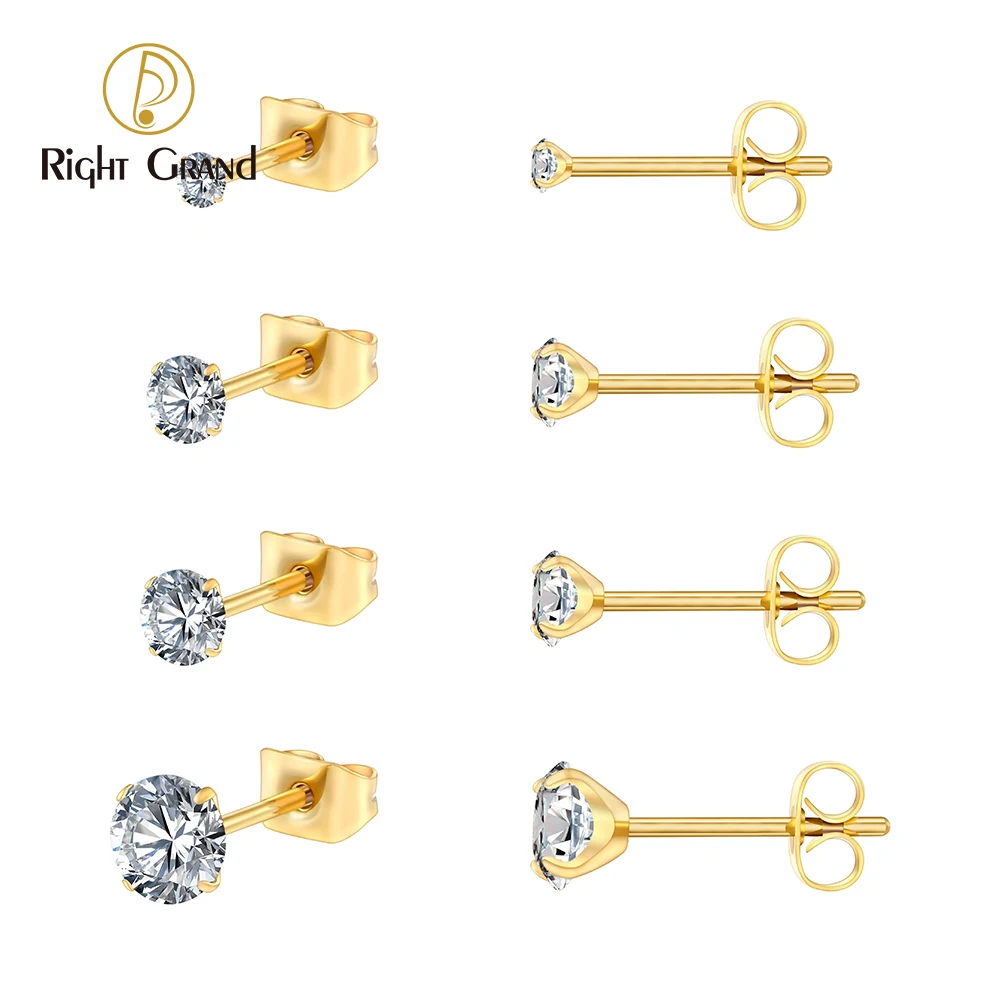
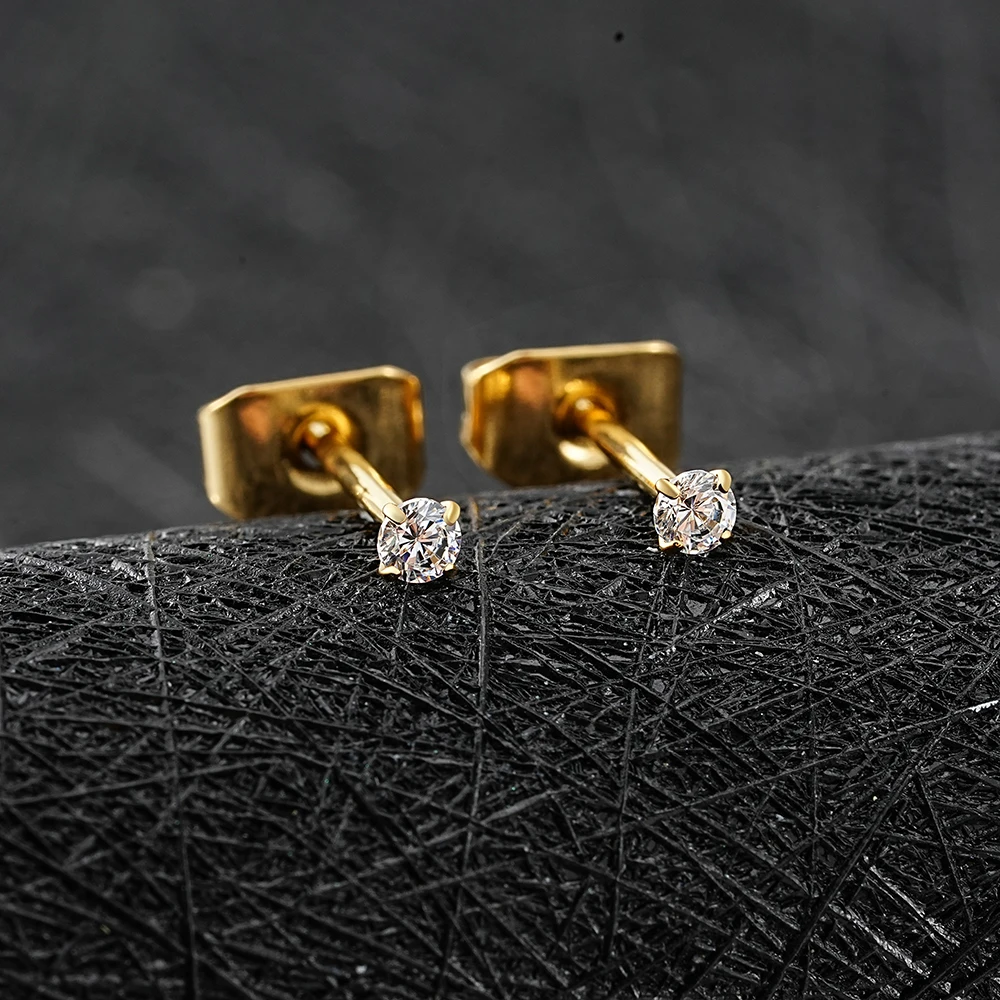
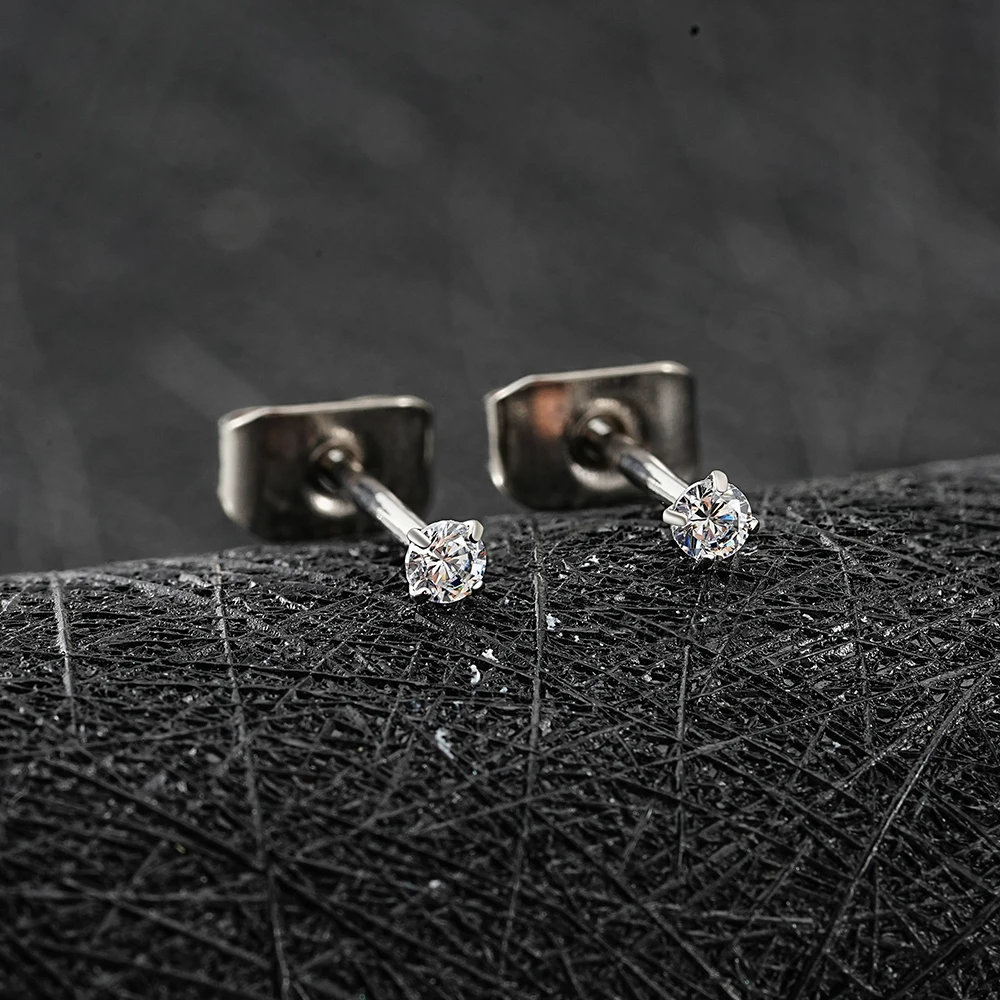
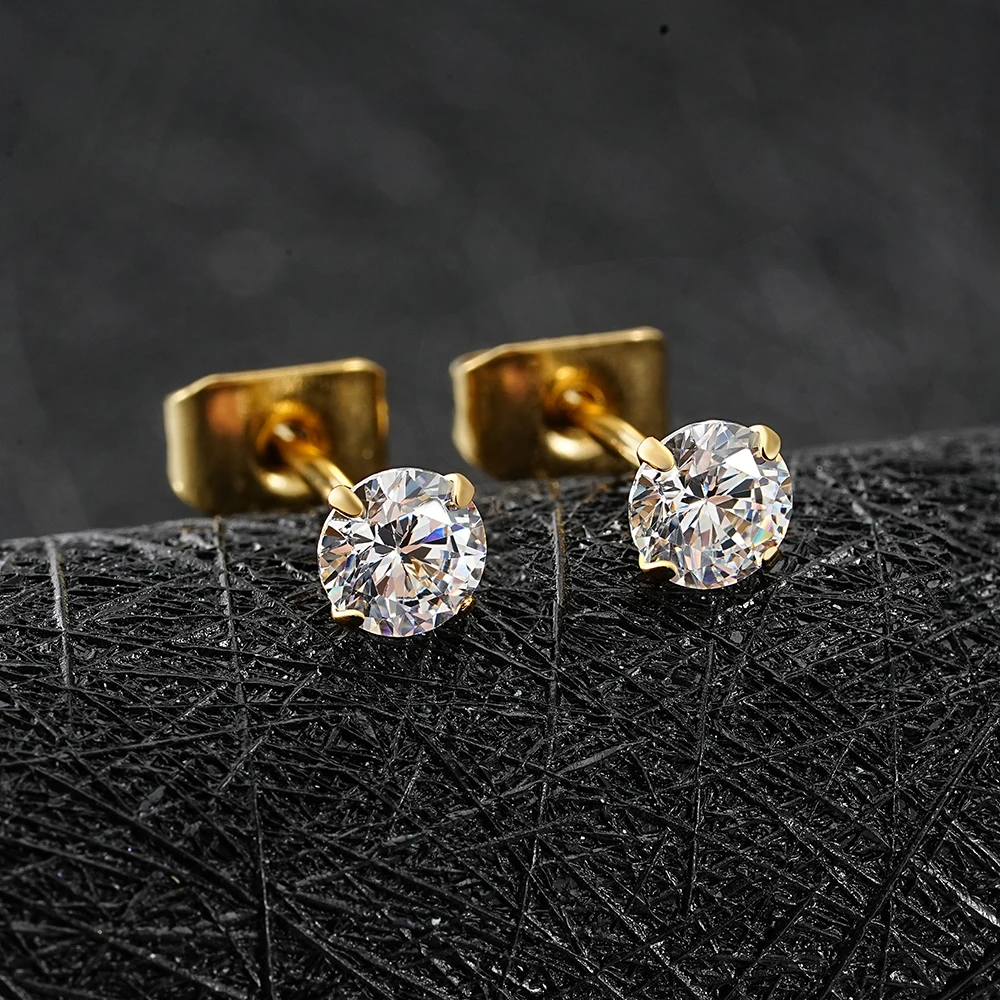
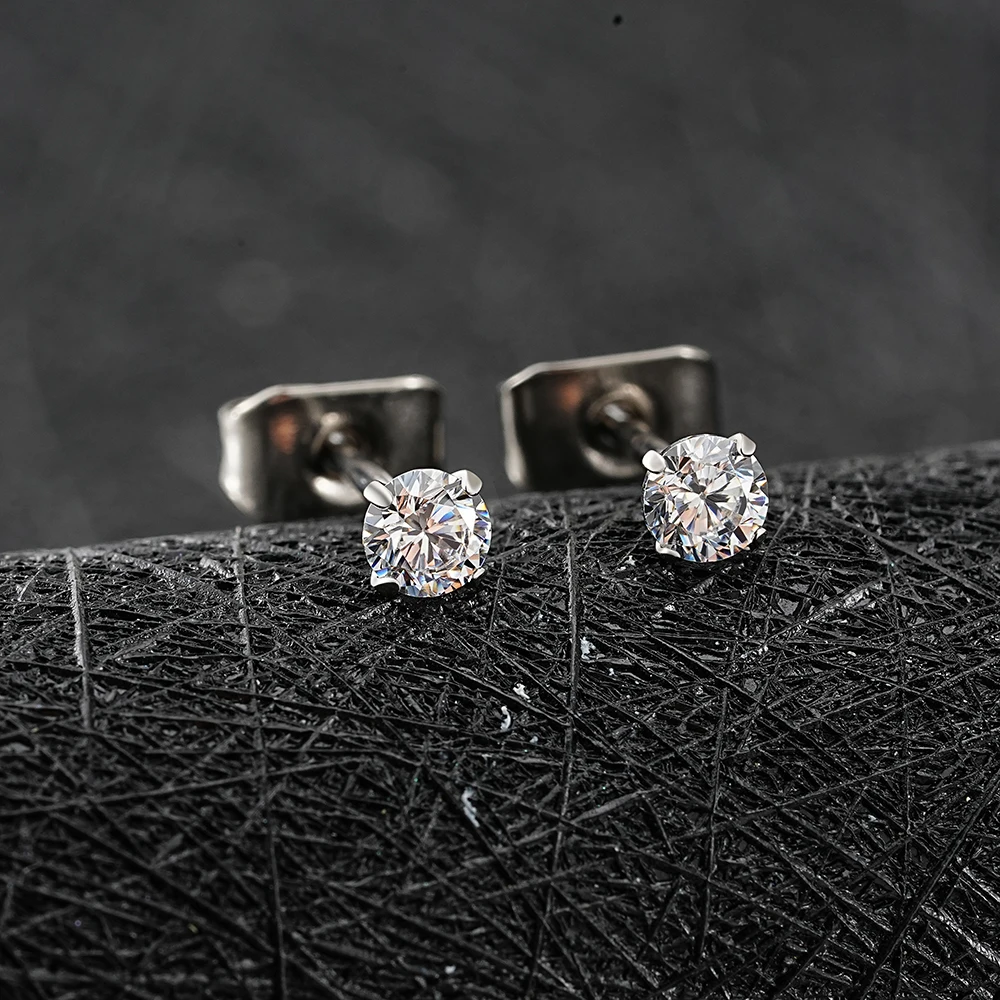
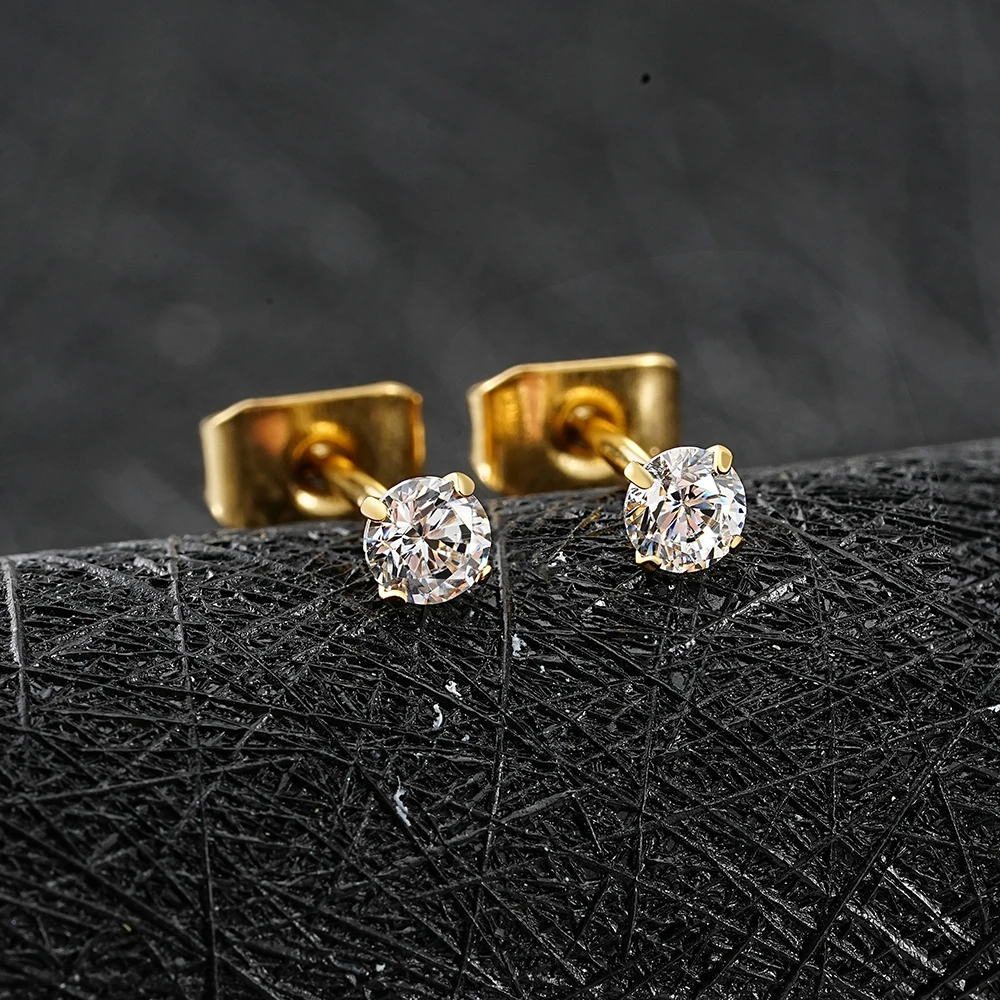
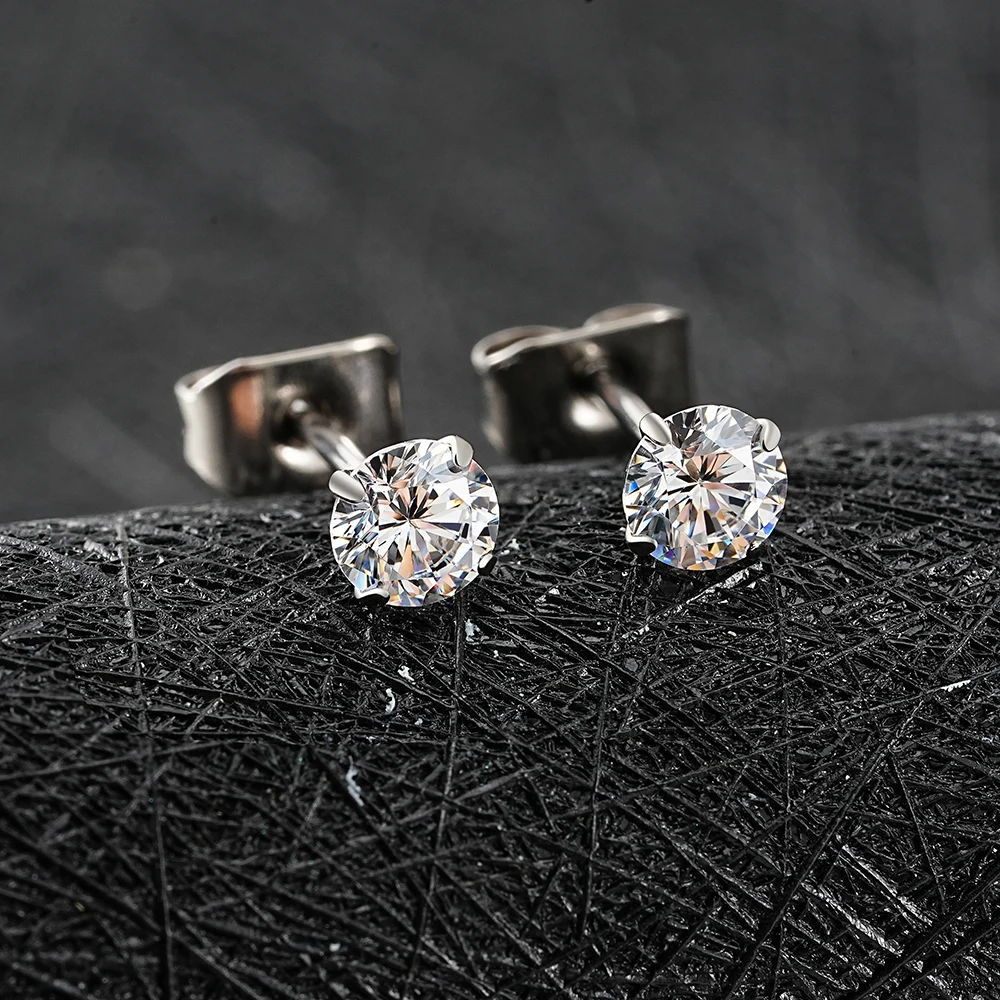
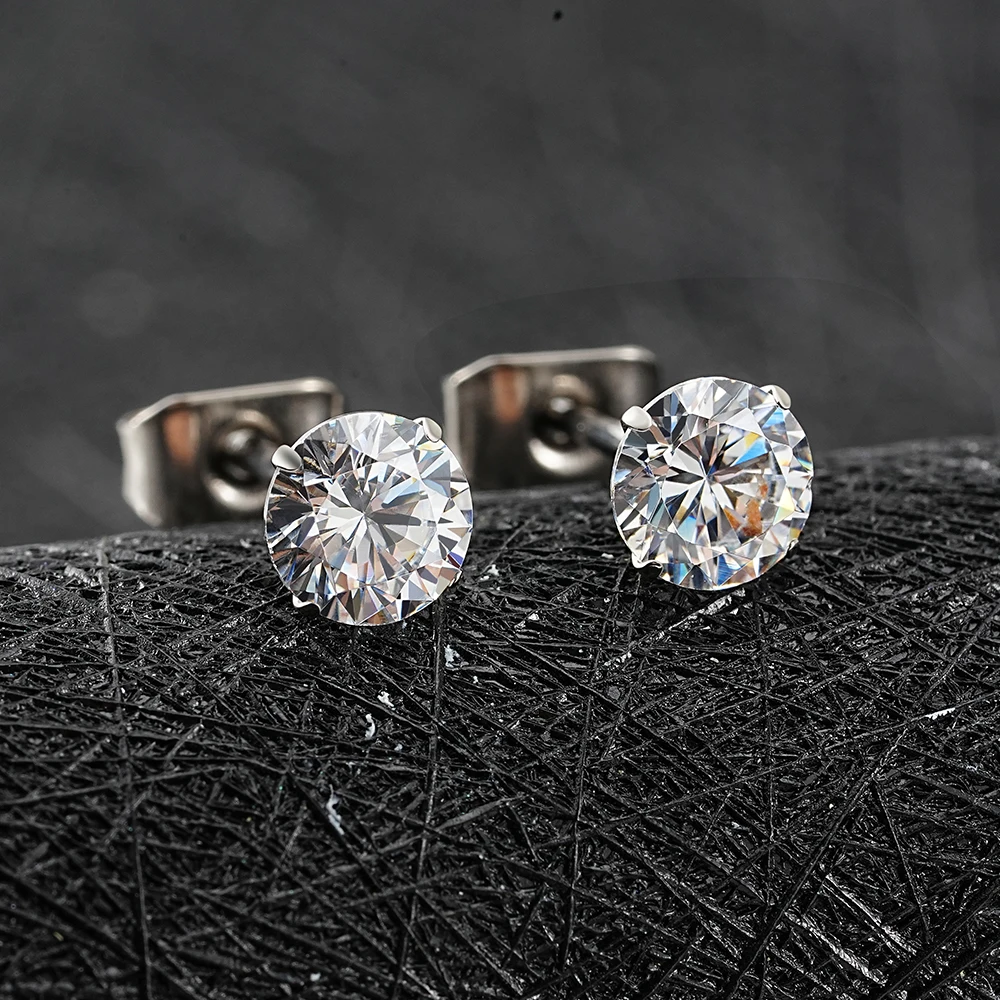
SPECIFICATIONS
Back Finding: Push-back
Brand Name: Rg
CN: Guangdong
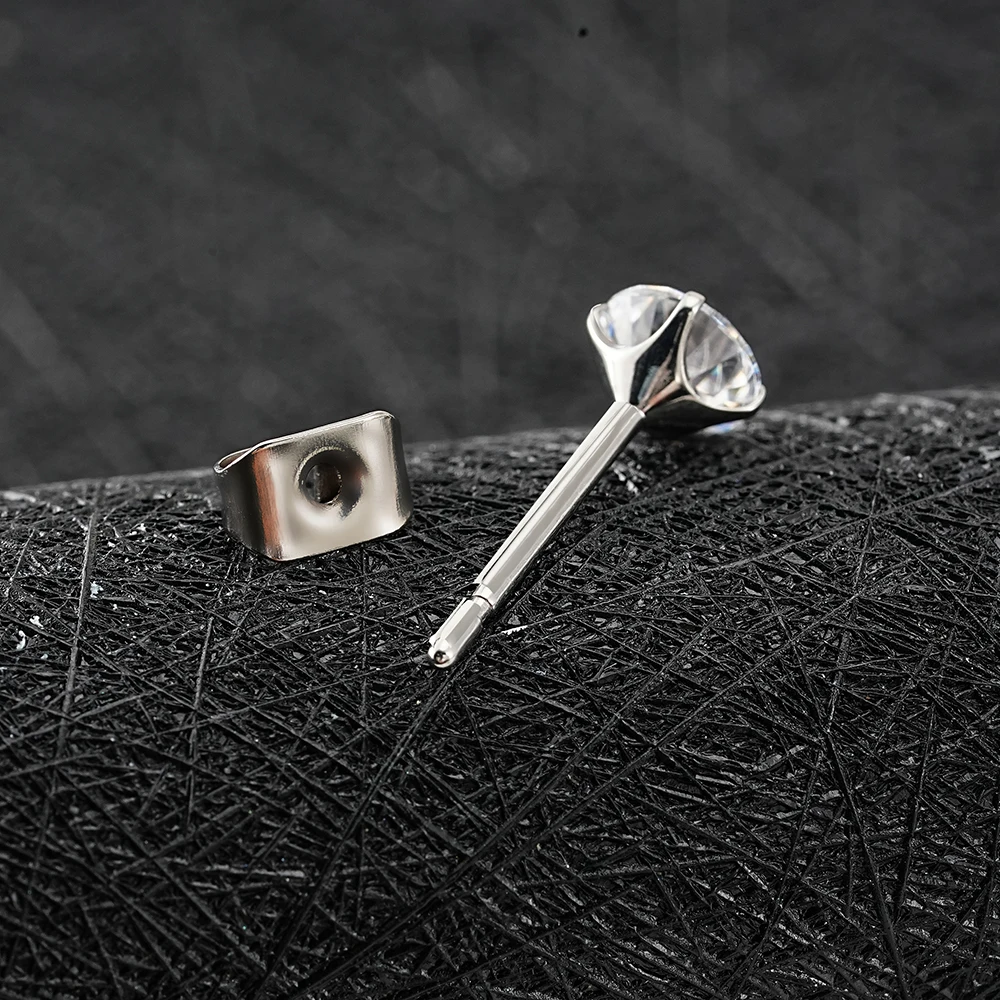
Cubic Zirconia Size: 2/3/4/5mm
Earring Type: Stud Earrings
Fine or Fashion: fashion
Gender: Women,Men,Women,Children
High-concerned chemical: None
Hypoallergenic: Yes
Item Type: Earrings
Jewelry Main Material: Implant Grade Titanium
Material: cubic zirconia
Metals Type: Titanium
Model Number: RG-C407
Occasion: Anniversary, Engagement, Gift, Party, Wedding
Origin: Mainland China
Pin Thickness: 0.8mm(20G)
Plating: Gold-color,PVD Gold Coating
Price for: 1 Pair
Process: High Quality Mirror Polished
Shape\pattern: Round
Stone Material: AAAAA Cubic Zirconia
Style: Classic
Supporting Dropshipping: Yes
Supporting Wholesale: Yes
Titanium standards: why not G23?
While both are 6AL-4V ELI, ASTM F136 is the specification for the alloy to be used for surgical implants.ASTM B348 GRADE 23 is not an implant grade of titanium and is not a substitute for ASTM F136.
Grade 23 and the ASTM B series standards are not specific descriptions of materials for contact with the human body, rather they are wide designations for commercial, industrial and engineering purposes.
For human body contact as surgical implants or body jewelry, you’ll want your Titanium stock certified from your raw materials supplier to F136 or F67, and finish the products according to F2791 and F86. This will be to your advantage, and for your customers.
I strongly suggest that you do not refer to Ti as G23, because it is too vague, the more specific F136 standard is what it should meet the for the purpose of body jewelry. Other jewelers often use that terminology in a vague and misleading manner.
ASTM F136 is a refined version of Grade 23 Ti6Al4V ELI.
The ASTM F specifications for surgical implant materials are the only meaningful thing to discuss when it comes to body jewelry. F136 and F67 are the only two currently in large scale jewelry production. Take a look at the above links for the exact ASTM recipe. Grade and the general material descriptions are meaningless to us when we need to specify a safe biomaterial.
The ASTM F136 standard is a recipe, it tells us how to make the alloy, then how to validate the results with the proper tests. An independent lab can then offer a certificate of tests for material source, so that anyone who request that material can have proof that it is safe.
I find that it is much easier to understand if you think of Ti as the wax that makes a honeycomb, as it forms a hexagonal crystal structure, with plenty of other things where the honey would be that are removed when the metal is refined. The 6% Al Oxide and 4% V Oxide are ceramics that are added to fill the gaps left in the structure for durability. Any impurities that remain would cause biological incompatibility, so ELI means Extra Low Impurities in the interstice. Basically, we remove the honey, fill the spaces with ceramic, and should be left with a strong geometric structure without any dirty leftover pollen or sugar crystals.